
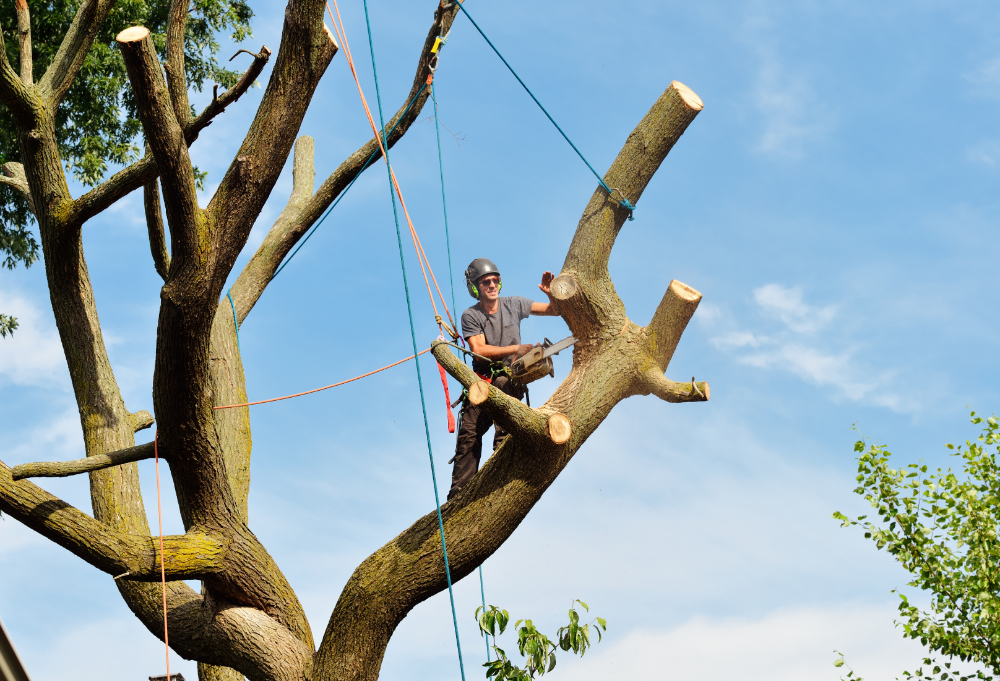
Early spring in Great Falls, MT presents a unique opportunity for homeowners and property managers to assess the health and safety of their trees. As snow melts and buds begin to emerge, the dormant winter season reveals structural damage, disease, and decay that might otherwise go unnoticed. Understanding why this season is critical for hazardous tree removal in Great Falls can help protect your property, family, and neighbors from potential tree-related accidents and liability issues.
Recognizing Dangerous Tree Signs in Early Spring
When winter ends, Great Falls residents should conduct a thorough visual inspection of their landscape. Dangerous tree signs become increasingly apparent as snow cover diminishes and trees transition from dormancy. Look for branches that have broken under the weight of ice and snow, leaving jagged edges and exposed wood. These broken limbs create entry points for pests and disease while also posing immediate hazard risks.
Pay close attention to any trees with bark damage, deep cracks in the trunk, or sections of missing bark. In Montana, these indicators often suggest internal decay has already begun. Dead trees or sections with no buds or leaves emerging in spring are particularly concerning. If an entire tree fails to leaf out while surrounding trees show healthy green growth, that tree requires immediate attention from a tree safety inspection professional in Great Falls.
Leaning trees are another dangerous tree sign to monitor carefully. While some trees naturally grow at angles, a sudden tilt or increased lean suggests root damage or soil instability. This is especially important in Great Falls, MT where spring thaw can cause ground movement and erosion issues affecting root systems.
Spring Thaw and Tree Hazard Assessment
The seasonal transition in Great Falls brings heavy water movement through soil as snow melts. This process directly impacts tree stability and creates conditions requiring professional tree hazard assessment. Saturated soil can weaken root anchorage, making trees more susceptible to toppling during spring storms.
A comprehensive tree hazard assessment in Great Falls should evaluate multiple factors. Certified arborists examine the tree’s structure, looking for multiple leaders (stems) that create weak attachment points, codominant stems that are prone to splitting, and branch angles that indicate structural weakness. The assessor also evaluates whether the tree has adequate root flare where roots transition into the trunk.
In Montana, spring assessments often reveal winter damage that wasn’t immediately obvious. Heavy snow loads can cause branches to bend downward, creating permanent weakness even after the snow melts. Professional tree safety inspection services in Great Falls can identify these problem areas before they become dangerous. Ice storms common to Montana also leave behind hidden damage within the canopy that becomes visible once leaves emerge.
Assessing Your Property for Removing Dead Trees
Removing dead trees in Montana should happen before late spring when insects become active and disease spreads rapidly. Dead trees create multiple hazards for Great Falls properties. They attract carpenter ants, bark beetles, and other wood-boring insects that can potentially spread to healthy trees. Dead trees also lose their structural integrity rapidly, making sudden branch failure or complete toppling increasingly likely as wood becomes brittle.
Walk your property systematically and mark any trees that appear completely dead or nearly dead. Use a simple test by scratching the bark with your fingernail; healthy trees show green underneath while dead wood appears gray or brown. Pay particular attention to conifers like pine and fir that are common in the Great Falls, MT area. These species often mask disease until significant internal decay exists.
Some trees may be partially dead with sections of dead wood mixed with living growth. This scenario is common in Montana after harsh winters. Partial removals or targeted pruning might save the tree, but professional evaluation is necessary. For completely dead trees or those that are dying and pose hazardous tree removal risks, prompt action protects your Great Falls property from liability.
Environmental Factors Making Spring Critical in Great Falls, MT
Great Falls experiences unique environmental conditions that make early spring particularly important for hazardous tree removal assessment. The area receives significant spring storms after winter, often with heavy winds that test tree stability. Trees weakened by winter damage are much more likely to fail during these spring weather events.
The soil conditions in Great Falls, MT also create specific challenges. Spring thaw brings rapid water movement and potential erosion around root systems. The freeze-thaw cycles common to Montana can loosen soil around tree bases, reducing stability. Property owners should pay attention to any trees that previously leaned or showed weakness; they are prime candidates for tree safety inspection before spring storms arrive.
Additionally, the window between spring thaw and summer growth is optimal for removing dead trees. In Montana, this timing minimizes impacts to wildlife that uses trees for nesting and feeding. It also ensures the tree removal work happens before leaves fully emerge, making the work safer and more affordable. Great Falls residents who wait until summer or fall may face much higher costs and greater tree hazard assessment complexity.
Creating a Tree Maintenance Plan for Preventing Tree Damage
Preventing tree damage in Great Falls begins with developing a systematic maintenance plan after your tree hazard assessment is complete. This plan should identify which trees require immediate hazardous tree removal, which need pruning to reduce risk, and which are healthy and just need regular monitoring.
Schedule professional tree care services annually in early spring when your property is most vulnerable. Preventing tree damage through regular maintenance is far less expensive than dealing with accidents, property damage, or liability claims. In Montana, a comprehensive approach includes removing dead trees promptly, pruning branches that cross or rub, removing branches that grow inward toward the trunk, and thinning dense canopies that trap moisture and promote disease.
Consider the location of each tree relative to your house, driveway, power lines, and property lines. Trees that hang over structures or power lines need special attention. A professional tree safety inspection in Great Falls can help prioritize which trees pose the greatest risk and should be addressed first. Document your maintenance work and professional recommendations, as this creates valuable records if property damage occurs.
For Great Falls, MT residents with mature trees, annual inspections become even more critical. As trees age, their structural integrity naturally declines, making hazardous tree removal decisions increasingly common. Don’t delay; early detection and professional guidance prevent catastrophic failures and the associated property damage and injury risks.
Conclusion
Early spring is the optimal time for identifying trees that require attention in Great Falls, MT. The season reveals winter damage, allows for professional tree hazard assessment before spring storms arrive, and provides an ideal window for removing dead trees. By conducting a thorough inspection of your property and consulting with certified arborists, you can implement a tree maintenance plan that prevents tree damage and protects your Great Falls home. Taking action now protects your family, neighbors, and property investment for years to come.
Need Tree Services Near You?
At Dave’s Tree Service, we’re more than just tree experts; we’re your neighbors, dedicated to keeping Great Falls’ outdoor spaces safe, healthy, and beautiful. Whether you need tree removal, trimming, or stump removal, our family has been proudly serving the community since 1985 with dependable service and honest care. We offer prompt emergency response and special discounts for veterans, working-class individuals, and seniors because we believe everyone deserves quality tree care. Contact us today to schedule a consultation; we’ll treat your trees like they’re our own!